After the sun goes down, a yard lit with intention looks nothing like one lit by a single floodlight over the garage. Architectural outdoor lighting is the difference. It uses placement, beam control, and warm light to shape how a space reads at night, drawing the eye to the features worth seeing and leaving everything else in soft shadow.
Done well, it makes a patio inviting after dark and a pathway safe to walk, while giving the garden a depth it usually loses at night.
Here is how it works across the three areas that matter most.
What Makes Lighting Architectural
Architectural lighting is defined by intention rather than brightness. A floodlight simply makes things visible. Architectural lighting decides what you notice first and how the space feels once the light is on.
It relies on a few principles.
- Fixtures stay hidden or shielded so you see the light and not the source, which removes glare.
- Warm color temperatures around 2700K flatter natural stone and planting far better than harsh white light.
- Several low-output fixtures replace one bright source, so the light layers instead of flattening everything.
- Most quality systems run on low-voltage LED, which is efficient, long-lasting, and safe to work around.
The Core Lighting Techniques
A handful of techniques do most of the work. Each one creates a different effect, and the skill is matching the technique to the surface or feature in front of it.
| Technique | What It Does | Best Used For |
| Uplighting | Aims light upward from ground level | Trees, columns, home facades |
| Downlighting | Casts light down from height, called moonlighting when placed in trees | Patios, lawns, soft pools of light |
| Wall grazing | Sets a fixture close to a surface so light rakes across it | Stone walls, textured masonry |
| Wall washing | Spreads even light across a broad surface | Smooth walls, fences, backdrops |
| Silhouetting | Lights the surface behind an object | Sculptural plants, ornamental features |
| Path lighting | Uses low fixtures along a route | Walkways, steps, borders |
| Spotlighting | Focuses a tight beam on a single point | Water features, statues, specimen plants |
Lighting the Patio
The patio is where people gather, so the lighting has to do two jobs at once. It needs enough light to move around and dine safely, along with a softer layer that keeps the mood relaxed.
The safety part comes from step lights built into seat walls or stairs, which light the ground without blinding anyone. Over the seating area, downlights mounted in a patio cover or a nearby tree give even, glare-free light from above.
Dimmers then pull all of it together, so you can go from bright enough to serve dinner to low enough to linger long after the plates are cleared. When the patio sits under a cover, running the wiring into the structure keeps the fixtures clean and out of sight.
Lighting the Pathways
Path lighting is the most misused technique in a yard. Lining a walkway with evenly spaced fixtures creates a runway look that belongs at an airport, not in a garden. Staggering the fixtures and spacing them farther apart casts overlapping pools of light that feel natural and still guide the way.
For steps and grade changes, dedicated step lights prevent trips without adding clutter. A subtler option skips path lights entirely and lights the walkway from a downlight set in a tree above, which illuminates the ground while hiding the source completely.
Lighting Garden Features
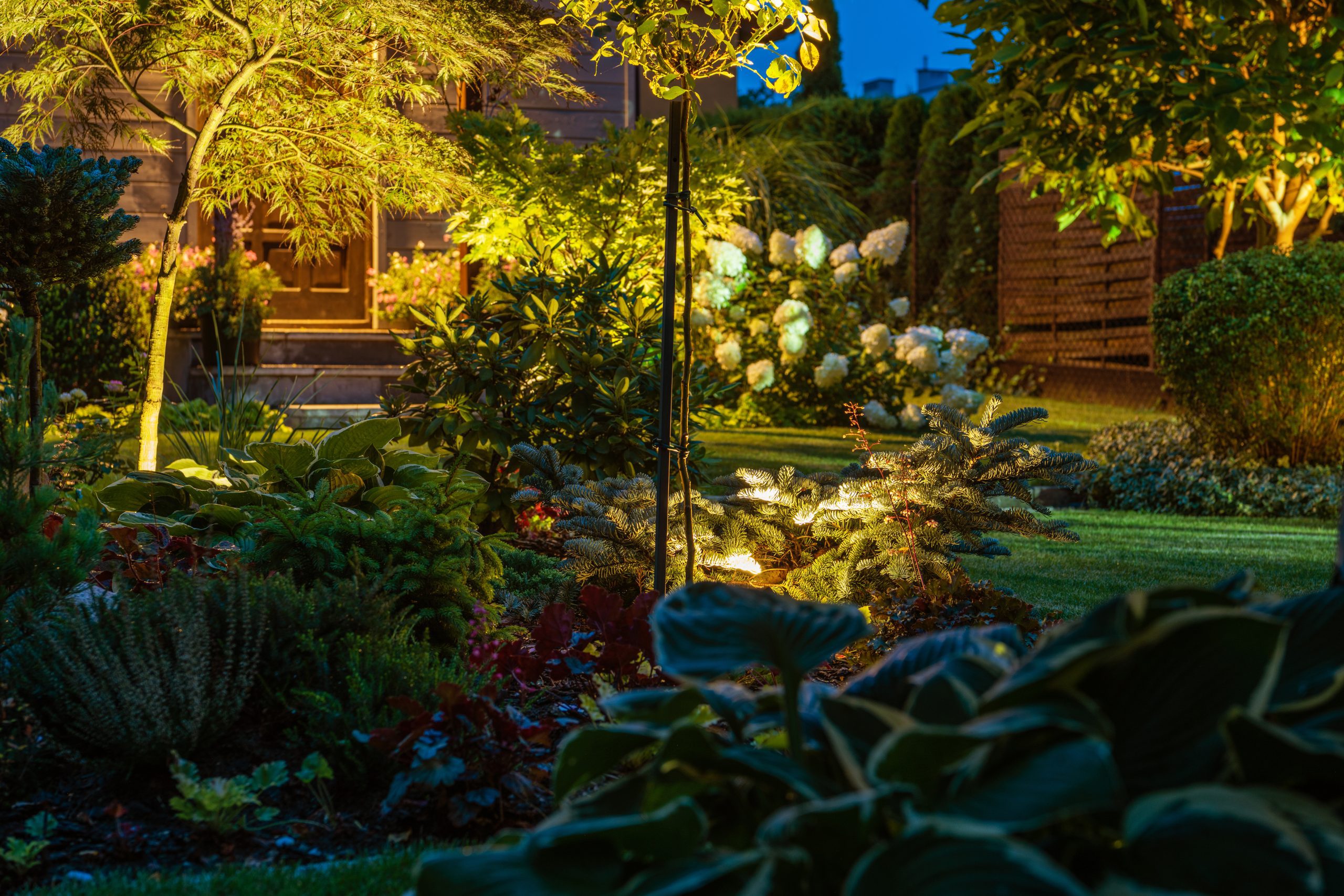
This is where architectural lighting earns its name. Uplighting a mature tree turns it into a focal point and reveals the branch structure overhead. A tight spotlight on a water feature catches the movement of the water and doubles the effect through reflection.
Grazing a stone wall from a low angle brings out every bit of texture in the surface. Silhouetting an ornamental grass against a lit wall behind it creates depth that a flat wash never could. The goal is to choose a few features worth highlighting rather than lighting everything at once.
Getting Architectural Outdoor Lighting Right
A strong lighting plan comes down to restraint and quality. A few principles separate a designed system from a scattered one:
- Light fewer things well rather than everything evenly, so the yard keeps contrast and focus
- Hold the color temperature consistent across the whole system, usually a warm 2700K
- Hide or shield every fixture so the effect shows and the bulb does not
- Choose durable, low-voltage fixtures that hold up to weather and years of use
- Add smart controls or dimmers so the scene changes with the occasion
Placement is what makes or breaks the finished look, which is why these systems are best designed on site rather than pulled from a catalog.
A Yard That Works After Dark
The best part of architectural outdoor lighting is how much it changes for how little it disturbs. The yard looks the same by day and transforms once the sun sets. If your patio, paths, and garden go quiet and unused after dark, a designed lighting plan is what brings them back.
Reach Hughes Landscape at (916) 209-0298 or info@hugheslandscape.co to start a plan for your property.