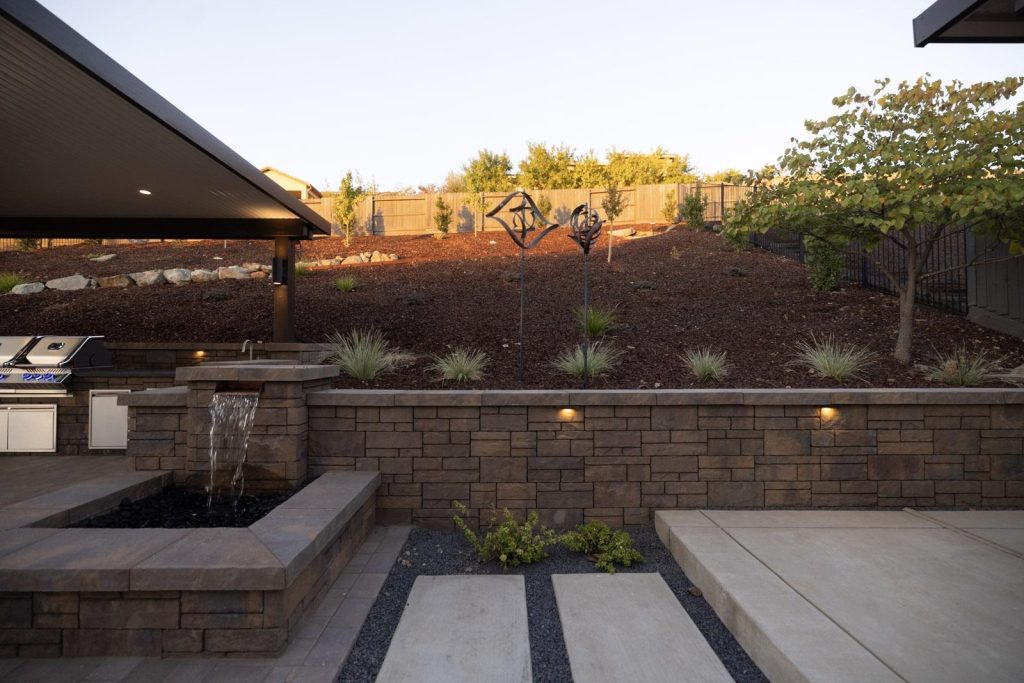
In Northern California, the rainy season is the hardest test a retaining wall faces. Months of dry weather give way to steady rain, and all that water has to go somewhere. A wall that held up all summer can start to bulge or crack once the ground behind it gets saturated.
A little retaining wall maintenance before the rains arrive is the cheapest way to avoid an expensive repair later. This guide covers what to check before the first storms, with a focus on drainage and erosion, the two issues behind most wall failures.
Why the Rainy Season Is Hard on Retaining Walls
A retaining wall does one main job: it holds back soil. When rain saturates that soil, the soil gets heavier and pushes harder against the wall. Water that cannot drain then builds up behind the wall and adds even more pressure.
That combined force is what makes walls lean and bulge over a wet winter. Most serious damage starts small and gets worse once water is involved, which is what makes seasonal retaining wall maintenance worth the time.
How to Maintain a Retaining Wall Before the Rains
Knowing how to maintain a retaining wall comes down to a few checks you can do in an afternoon. Walk the wall before the first storm and look closely at each of these.
Clear the Drainage
Start here, since good retaining wall drainage is the single biggest factor in whether a wall survives the winter. Make sure the weep holes along the base are open and not clogged with dirt or debris. If the wall has a drain pipe or French drain, confirm that water moves through it freely. Keep the ground at the base clear so water runs away from the wall instead of pooling against it.
Inspect for Cracks and Leaning
Look over the face of the wall for new cracks, loose blocks, or sections that have started to lean. A level held against the wall will reveal a tilt that is hard to catch by eye. Small cracks are easy to seal now with the right filler for your wall’s material, and sealing them early keeps water from working its way in.
Refill Eroded Backfill
Check the soil behind the top of the wall. If summer settling or past runoff has washed some away, the wall has lost support it depends on. Refill low spots with gravel or soil so the wall is backed evenly before heavy rain adds pressure.
Cut Back Vegetation
Trim any shrubs or trees whose roots are reaching into or under the wall. Deep roots can push blocks out of place and open gaps over time. If you want planting near the wall, keep it to shallow-rooted species that will not reach the structure.
Keeping Water and Erosion in Check
Beyond the seasonal checks, a few built-in features keep water and erosion from threatening the wall in the first place. They are worth confirming before the rains, and worth adding if your wall does not already have them.
A gravel or crushed-stone layer behind and beneath the wall lets water pass through instead of collecting against it. Weep holes and a perforated drain pipe then carry that water away from the structure. Together they relieve the pressure that saturated soil would otherwise put on the wall.
Erosion is the other half of the problem. Fast runoff above the wall strips away the soil that supports it. Ground cover like grass or low spreading plants on the slope holds that soil in place and soaks up rain before it reaches the wall. Directing downspouts and runoff away from the top of the wall protects it further.
Maintenance by Wall Material
Different materials age in different ways, so the upkeep changes with the type of wall you have.
| Material | What to Watch | Upkeep |
|---|---|---|
| Concrete | Cracking over time | Fill cracks early, seal to resist water |
| Stone or masonry | Loose stones, crumbling mortar | Reset loose stones, repoint mortar as needed |
| Timber | Rot and insect damage | Apply a water-resistant sealant, replace damaged boards |
Whatever the material, the goal is the same. Small, regular fixes cost little and keep the wall sound, while ignored damage tends to spread once water gets into it.
When to Call a Professional
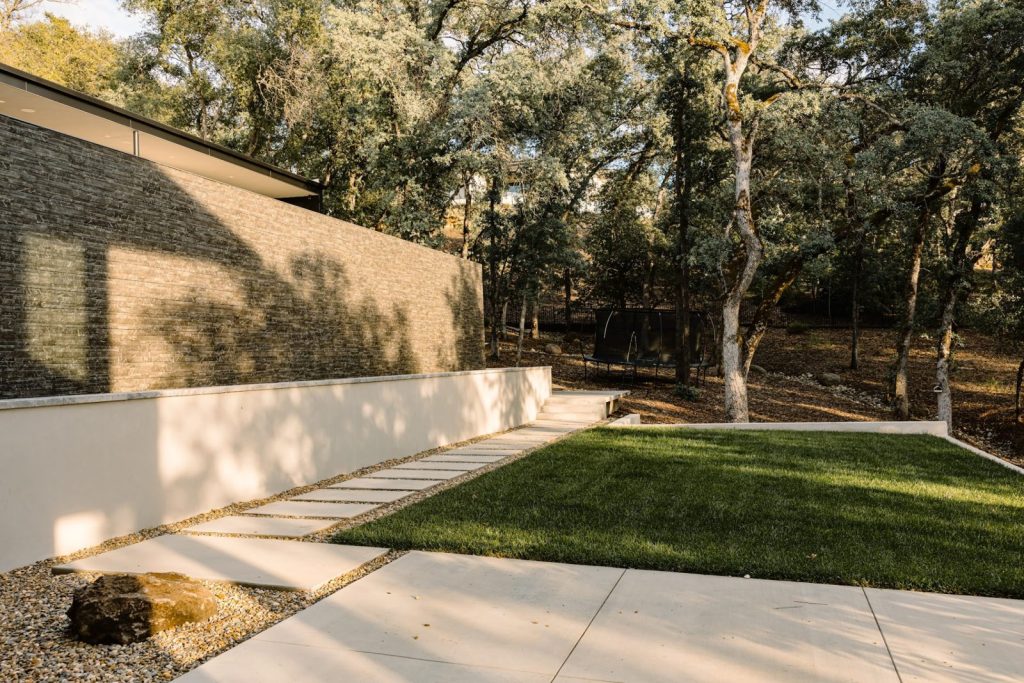
Some problems point to a structural issue that goes deeper than routine upkeep. Call a professional if the wall leans or bulges noticeably, since that often means the footing has shifted or the water pressure is too high.
Large or spreading cracks are another warning sign, and so is water that keeps pooling behind the wall despite your efforts. Having the wall assessed and repaired by a professional early can prevent a full collapse and the cost that comes with it.
Get Ahead of the Rains
A retaining wall rewards a little attention at the right time of year. Clear the drainage and seal any small cracks, then shore up the soil before the first storm, and the wall will carry the wet season without trouble.
If your wall needs more than routine upkeep, or you are planning a new one built to handle the rains from the start, Hughes Landscape can help. Call (916) 209-0298 or email info@hugheslandscape.co to get started.