A koi pond is one of the few landscape features that is genuinely alive. The water moves and the fish move, and the whole scene shifts through the day in a way a static fountain never will. That is also what makes it harder to get right.
A koi pond has to work for the fish that live in it and for the people watching from the patio. The best koi pond ideas balance both. They keep the water healthy and the koi safe while creating the movement, sound, and calm that drew you to the idea in the first place.
Here is how to plan one that does all of it.
What Sets a Koi Pond Apart from a Garden Pond
A koi pond is a habitat, not a decorative pool. Koi grow large and live for decades, so the pond has to give them room and stable conditions. Depth is the first difference. A koi pond should reach at least three feet, and deeper is better, since depth holds the water temperature steady and gives the fish somewhere to retreat.
Filtration is the second. Koi produce a lot of waste, so the pond needs real biological and mechanical filtration to stay clear and healthy. Strong circulation and oxygen finish the picture. Plan these from the start and the rest of your koi pond ideas have something solid to build on.
Koi Pond Ideas Worth Building Around
These ideas serve the fish and the setting at the same time.
Add a Waterfall or Stream for Movement and Oxygen
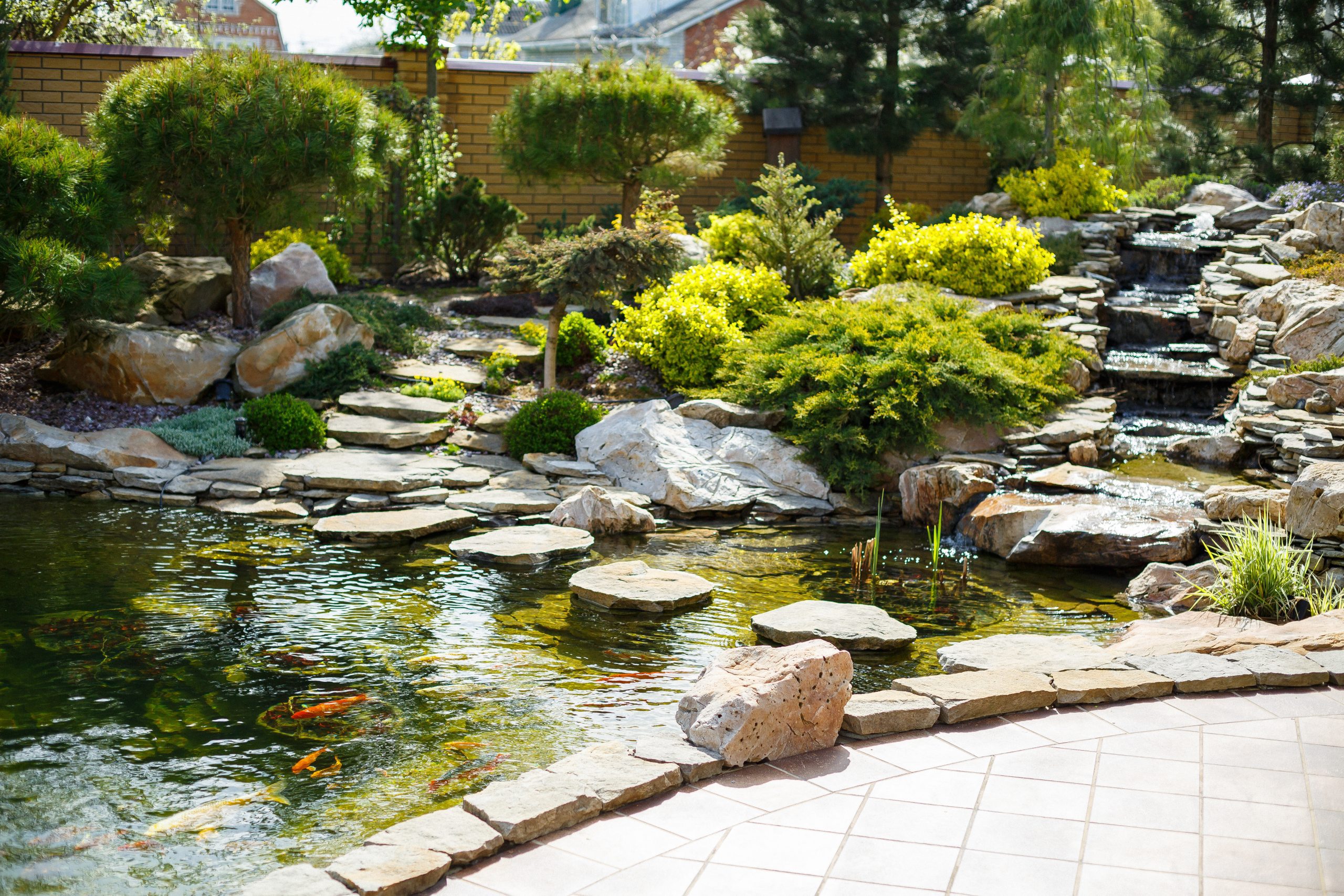
A waterfall does more than look good. The falling water pulls oxygen into the pond, which koi need to thrive, and it keeps the surface moving so the water does not stagnate. A stream feeding into the pond adds the same benefit over a longer run. The height of the drop controls the sound. A short spill gives a soft trickle, while a taller cascade produces a fuller, steadier sound you can hear from across the yard.
Build a Bog Filter for Naturally Clear Water
A bog filter is a planted gravel bed through which water passes before it returns to the pond. The plants and beneficial bacteria pull out the nutrients that would otherwise turn the water green. It keeps a koi pond clear with less reliance on equipment, and it reads as part of the garden rather than a piece of machinery.
For homeowners who want clean water without constant upkeep, this is one of the most practical koi pond ideas available.
Raise the Pond to Seating Height
Most ponds sit at ground level, but raising the wall to bench height changes the whole experience. It brings the koi up to eye level, makes feeding easier, and gives you a place to sit right at the water. A raised edge also keeps debris out and adds a layer of protection from predators. This works especially well on a patio or near an entry, where the pond becomes a feature people gather around.
Design In Predator Protection
Herons and raccoons see a koi pond as an easy meal, so good design plans for them. Steep sides make it hard for animals to wade in, and a deep zone gives koi somewhere to escape.
Adding fish caves or a short tunnel of stacked rock gives them cover the moment a predator appears overhead. These details cost very little during the build and save a great deal of heartbreak later.
Light the Water for Evening Viewing
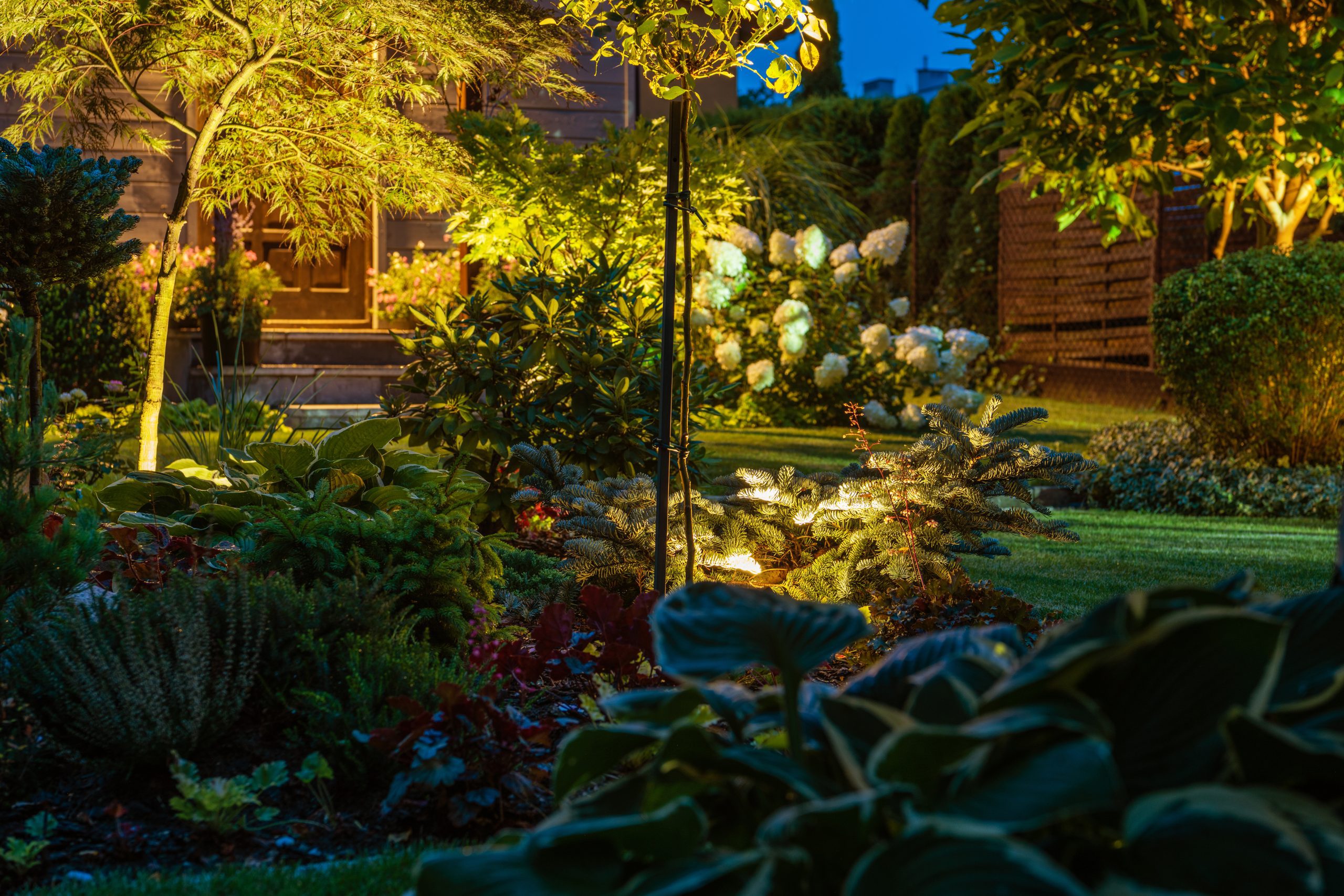
Koi are often most striking after dark under the right light. Submerged fixtures catch their color and movement, while a light aimed at the waterfall highlights the falling water. Soft lighting around the edge extends the hours you can enjoy the pond and makes the area safe to walk at night. Warm, low-voltage fixtures keep the effect natural rather than harsh.
Size the Pond to the Fish, Not the Yard
Koi need volume to grow and to keep water quality stable. A common guideline is to allow several hundred gallons of water per adult koi, since crowded ponds foul quickly and put stress on the fish.
Building slightly larger than you think you need is almost always the better call, because koi grow fast and a pond that fits them today can feel tight in a couple of years. A larger volume also holds its temperature more steadily and gives the filtration room to keep up with the load.
Shape the Edge to Match the Home
The edge treatment decides whether a pond reads as formal or natural. Boulders, gravel, and marginal plants create a soft, organic look that suits a garden setting and hides the liner completely. Clean stone coping and straight lines give a modern feel that fits a contemporary home.
Either way, the pond should look like it belongs to the surrounding landscape instead of being dropped into it.
Getting the Calm Right
Movement and sound are easy to add. Calm takes a little more thought. A pond delivers it through contrast, pairing the moving water of a waterfall with a still, reflective surface nearby. That quiet area mirrors the sky and the planting around it, which is where much of the sense of peace comes from.
Placement matters too, since a pond you can see and hear from where you actually sit gives back far more than one tucked in a far corner. The sound itself can be tuned as well, since narrowing the spillway speeds the water up for a brighter note and widening it softens the flow to a gentle wash.
Surround it with soft planting and a few places to pause, and the effect comes together.
Planning a Koi Pond That Lasts
A koi pond rewards planning more than almost any other water feature, because the choices made early decide both how it looks and how healthy the fish stay. Get the depth and filtration right, keep the water circulating, then layer in the ideas that bring it to life. The result is a feature that adds movement and sound while bringing a sense of calm to the whole yard around it.
At Hughes Landscape, we build koi ponds as part of a full outdoor remodel, so the water, planting, lighting, and stonework are designed together rather than added piece by piece.
Want one for your own yard? Request an estimate today.